
Searching St. John the Baptist Parish Criminal Dockets
The St. John the Baptist Parish Clerk of Court links three tools: Civil & Criminal Inquiry, eClerks LA, and Clerk Connect. The parish inquiry needs an account. So it is not an anonymous public screen. Search a defendant name, case number, filing year, and division when you have those details. A result can identify the matter. A current setting, a document image, or a certified copy may still take a further request to the Clerk.
For a St. John the Baptist Parish criminal search, eClerks LA requires registration or login through its current flow. Its help materials describe a statewide index. That index does not promise free images for every St. John criminal case. Write down the result number. The case caption and parish field help as well. Those details speed things up at the Clerk's criminal desk or in the parish inquiry.
- Open the Clerk-linked inquiry route or the eClerks LA account flow and complete any required registration.
- Search by the defendant’s name or enter the case number if it is known.
- Check that the result belongs to St. John the Baptist Parish and note the division, filing date, and case status.
- Read the most recent event, then compare the setting with the 40th JDC court schedule.
- Ask the Clerk for the exact minute entry, order, or certified copy when the inquiry does not answer the record question.
Note: A search result only identifies a case. The Clerk decides whether a particular document or certified copy can be released.
St. John Parish Criminal Inquiry Access
The Clerk also links Clerk Connect for civil and criminal inquiry, retrieval, printing, and related services where offered. Access runs through authentication and office-specific features. Some subscriptions are third-party and nonrefundable. Confirm what a purchase covers before you buy. Treat the inquiry as a case index or event register, not the official court file.
The simplest fallback is calling the St. John the Baptist Parish criminal desk directly. In Edgard, call 985-497-3331. At the Eastbank office, call 985-652-8041. Staff can handle a request that names a case number and a document. The criminal fax line is 985-497-6941. For general questions, email the Clerk at info@sjbparishclerk.gov. A written request can also go by mail once you confirm the proper copy type and payment. The Clerk's pages do not promise a public workstation, so ask whether staff-assisted inquiry or an access terminal is currently offered.
Note: Do not send private identifiers by ordinary email unless the Clerk specifically directs that method.
Inside a St. John the Baptist Parish Criminal Docket
Louisiana's docket-book and minute-book rules set the basic record. A St. John the Baptist Parish criminal header lists the case number, the State as prosecutor, filing date, division or judge, charge, status, and disposition. The event trail may show an indictment or bill of information, arraignment, plea, bond, motion, hearing, continuance, trial, sentencing, or another order. Money entries appear too. Expect bond, fines, costs, restitution, or a balance.
| Case number | The unique court identifier. Use the displayed number rather than assuming a local prefix or format. |
|---|---|
| Caption and charge | The State’s case caption, offense or charge, and the filing context shown by the inquiry. |
| Division | Division A, B, or C and the assigned judicial setting for the case. |
| Events | Arraignment, motions, plea, continuance, trial, sentencing, and minute entries recorded as the case moves. |
| Disposition | The recorded outcome, such as a dismissal, plea, verdict, sentence, or program order. Confirm its legal effect from the record. |
Document images, protected fields, and restricted entries may be missing. The docket is an index, not the file itself. It does not replace an arrest report, a transcript, or the certified record the Clerk keeps.
St. John Parish Criminal Drug Court
A Division B drug plea and a Drug Court session are two different docket settings. The 40th JDC specialty-courts page describes Drug Court as a post-plea program for qualifying St. John residents with drug or drug-related convictions. Sessions run every other Thursday. The program has its own participants and staff. Never infer a felony trial date from it.
The St. John the Baptist Parish program began in October 2000. It centers on eligible first- or second-time offenders approved by the District Attorney and treatment providers. Violent offenses are excluded. That context explains why an event may list a program order or review instead of a standard trial setting. For the next required appearance, the case's current minute entry is the better source.
The official Division A court page also names criminal check-in and court staff roles. Those division resources help explain the court channel. They do not replace the case record.
The Clerk’s Criminal Department page shows the office’s criminal filing, cost, and expungement resources.
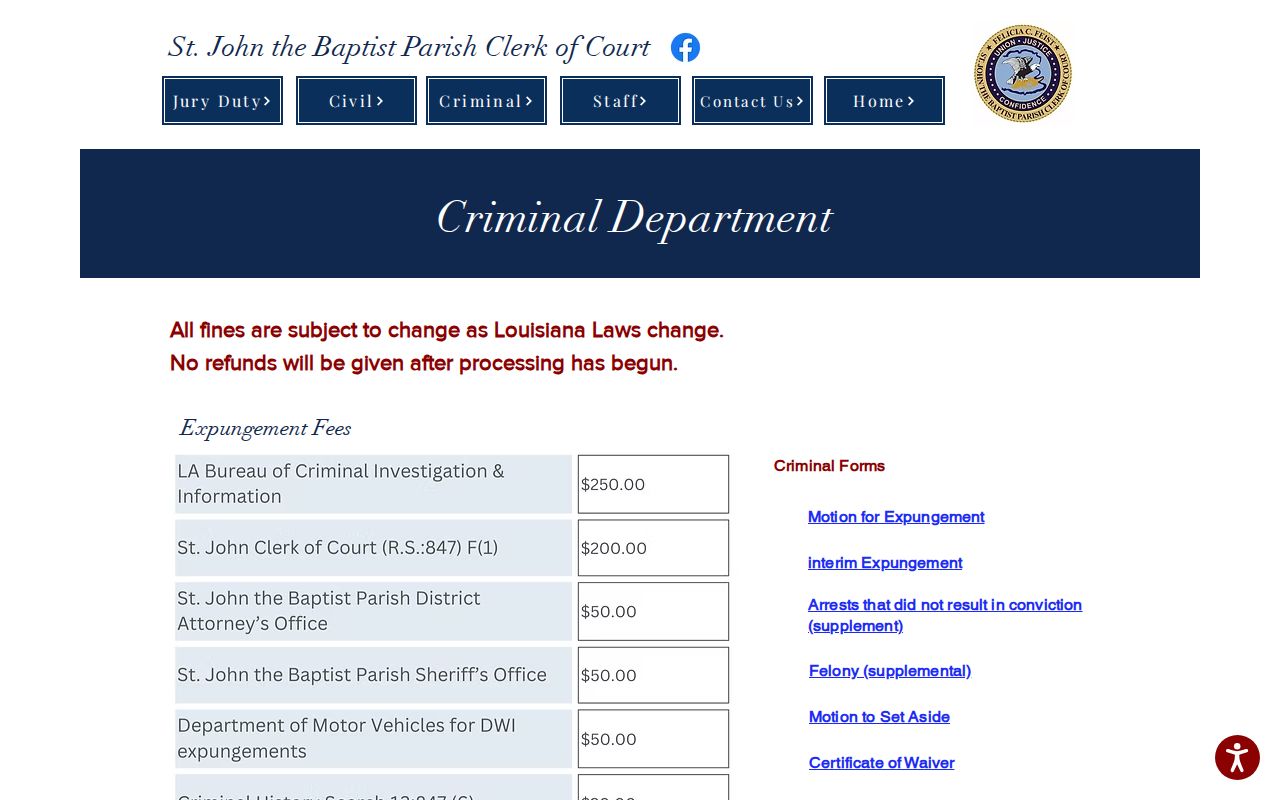
Those resources are a starting point for a record request or form question, not proof of a particular case result.
How a Criminal Case Moves
A St. John the Baptist Parish criminal docket usually moves from filing to arraignment, pretrial work, plea or trial, disposition, and sentencing. Cases wander, though. Not every docket shows each step in order. A continuance or reset can insert new settings, and a plea, dismissal, program order, or other event may arrive before any trial date is reached. The court records simply log what happened.
Docket flow: Filing → Arraignment → Pretrial → Plea or Trial → Disposition → Sentencing
The 40th JDC schedule lists felony jury weeks, felony motions, felony pretrials, arraignments, traffic and misdemeanor hearings, and Division B drug pleas. That framework explains the terms on a case. It is not a live name-by-name calendar. When a later minute entry or notice differs from the recurring schedule, the minute entry controls.
St. John Parish Criminal Minute Records
Louisiana procedure keeps two books, and the difference matters. The docket book holds the action number and title. For St. John the Baptist Parish, it also lists filing dates, costs, and counsel of record. The minute book is different. It holds the court's orders, judgments, motions, proceedings, and judicial acts. A minute clerk records daily proceedings and files items tendered in open court. So a bare docket label can answer one question. A full minute entry can answer another about the same case.
What if a criminal docket search turns up only a brief event? Ask for the named item. It might be an arraignment minute, an order, a judgment, or a sentencing record. The Clerk can also tell plain inspection or copying apart from a certified copy under seal. For the statutory description of the docket and minute books the Clerk uses, see Louisiana Code of Civil Procedure article 254.
The official Division A page identifies court staff and criminal check-in information.
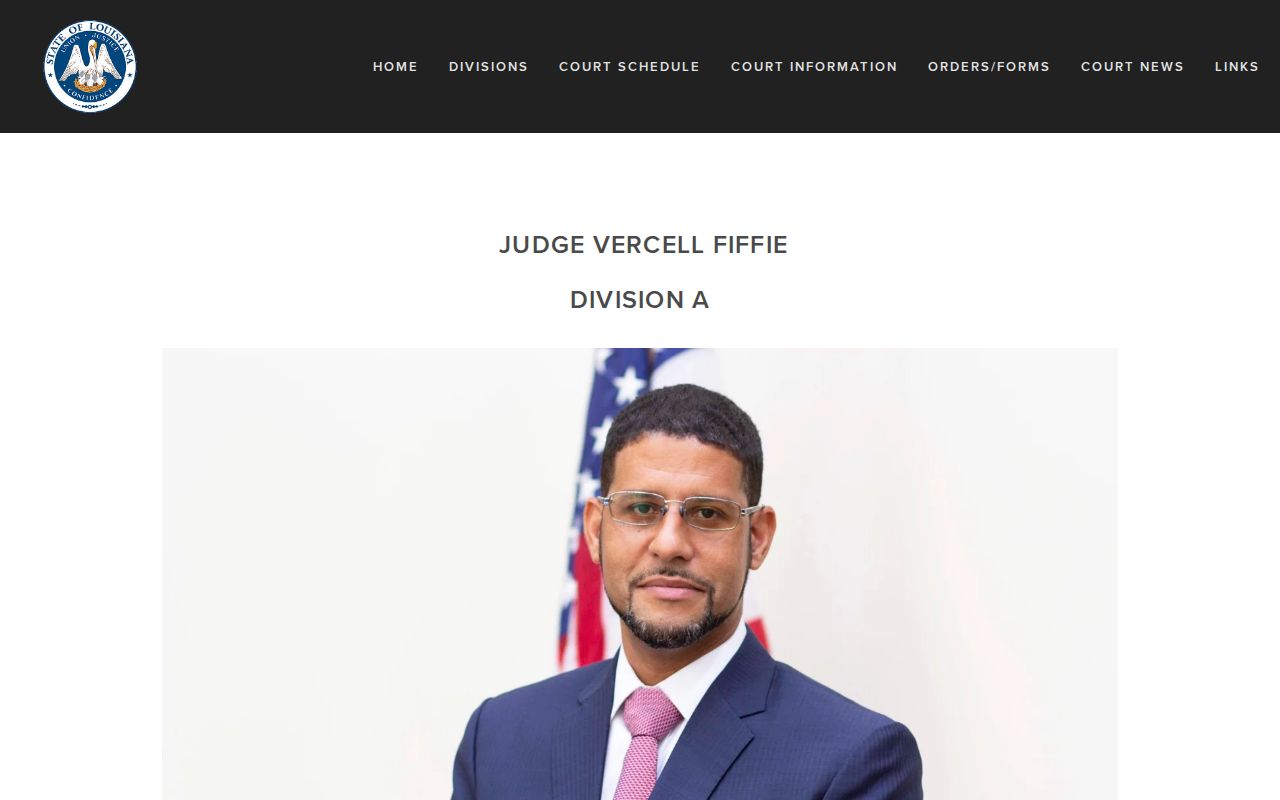
Division information can help confirm the assigned court channel when a docket record identifies a division.
Courts That Hold Criminal Dockets
Criminal dockets in St. John the Baptist Parish live in the Fortieth Judicial District Court. Most people call it the 40th JDC. It is the parish's general-jurisdiction trial court. The court hears felony and misdemeanor criminal matters along with traffic, juvenile, civil, family, and probate cases. Divisions A, B, and C make up the court. The parish Clerk, not the District Attorney, holds the court docket, minute book, judgments, and filed court records.
The court labels Westbank traffic and misdemeanor matters, all jury and bench trials, and monthly felony motions as Edgard matters. Do not confuse a Sheriff arrest report or a ticket-payment record with the criminal docket. Those are separate files. One more caution applies. If a citation or summons names a different court, follow the issuing court on that paper. The 40th JDC may not own the case.
The 40th JDC special-programs page documents the court’s separate Drug Court structure.
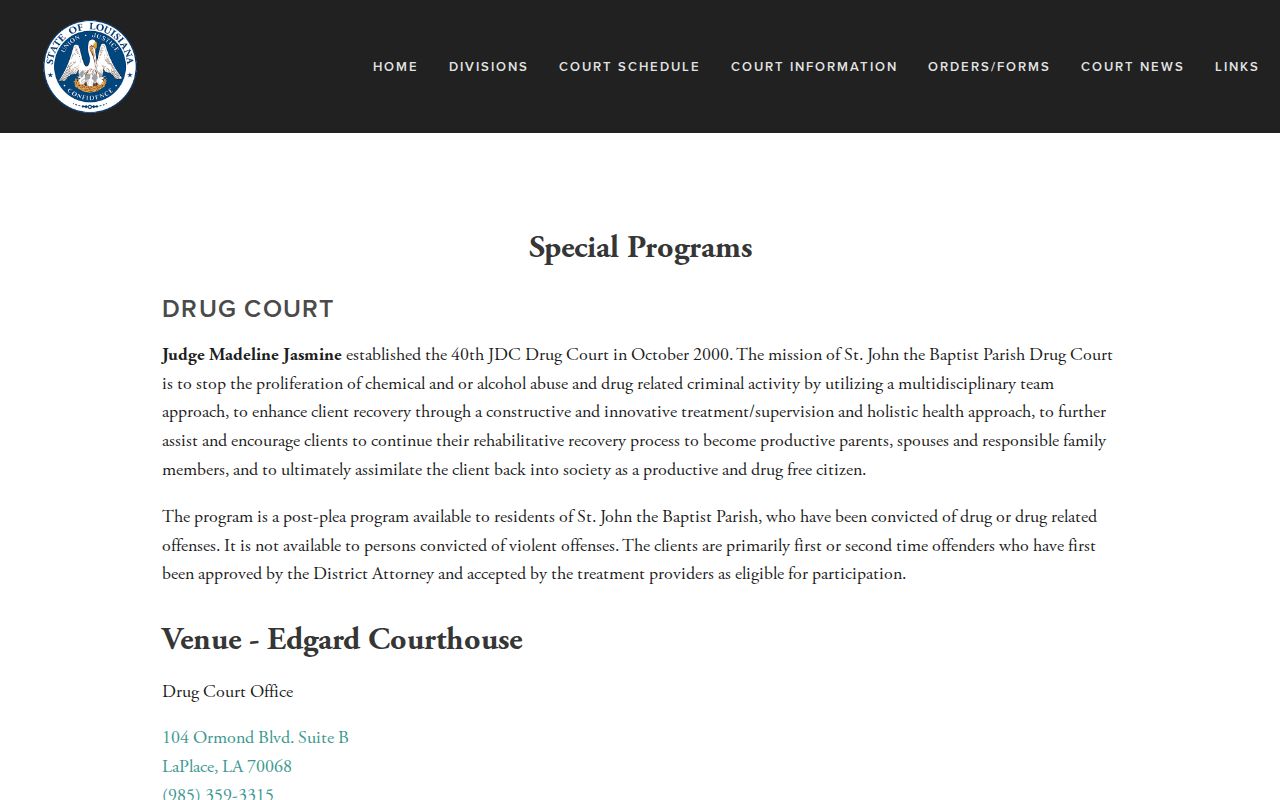
The program information illustrates why a specialty setting should be read in the context of the assigned criminal case.
St. John Parish Criminal Expungement Steps
The Clerk's criminal page draws a line worth knowing. Expungement forms must be completed before you bring them for filing. Clerk staff cannot help fill them out. The page lists fingerprints and an arrest report from the St. John Sheriff's Office as supporting items for the relevant forms. Eligibility is a legal question, though. The forms do not replace advice from counsel.
Start by identifying the court case. Then pick the exact type of expungement or supplement you need. Gather the listed Sheriff materials. Finish the form before you arrive. Ask the criminal desk about the current filing costs for your form. The official figures are published as images and can change. A request should never be mailed with guessed fees. The criminal page also carries a no-refund notice on processing.
Note: An expungement filing concerns access to a court record. It does not turn a Sheriff-held arrest record into the same file.
Sealed Dockets and Public Access
St. John the Baptist Parish criminal court records start from a public-access rule. The rule has limits. Juvenile matters, sealed records, protected identifiers, and other records made confidential by law or court order may not show up in a public inquiry. A missing image or a restricted label is not proof that no case occurred. Do not read an empty result as the answer. Ask the Clerk for the lawful access path.
Louisiana access rules:
C.C.P. art. 251 makes the Clerk custodian and generally permits examination and copying during open hours, subject to legal exceptions.
C.Cr.P. art. 971 says expungement removes a record from public access without destroying it.
C.Cr.P. art. 973 treats an expunged record as confidential while preserving limited access stated by law.
The Legislature’s expungement findings provide the official statutory context for restricted public access.
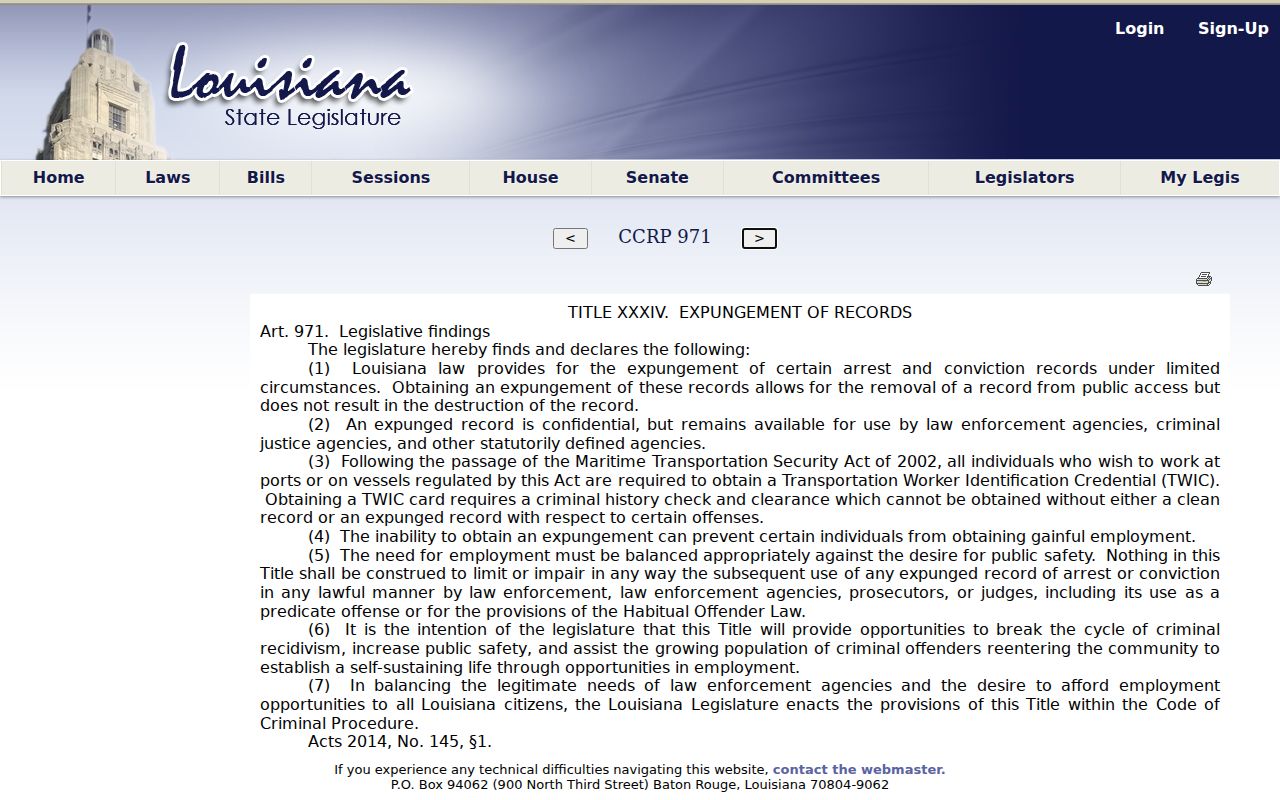
The statute supports a careful distinction between an expunged record and a record that has never existed.
St. John Parish Criminal Docket Context
The Louisiana Supreme Court's 2024 report covers District 40 and St. John the Baptist Parish. It lists 1,550 criminal filings. That aggregate gives useful context for the criminal docket. It cannot tell you an individual case status or the next court date. Locate a record by its own case number. Check the division and most recent event too.
Attorney filings in criminal and traffic actions fall under a state electronic-filing framework. It began January 1, 2026. Statutory exceptions apply. A filing confirmation can establish an accepted electronic filing date and time. Even so, a public inquiry may hit access limits or a delayed image. For one specific matter, the Clerk's record and the assigned division give the case-specific answer.