
Searching St. John the Baptist Parish Civil Dockets
The St. John the Baptist Parish Clerk of Court offers a Civil & Criminal Inquiry path. It also offers eClerks LA and Clerk Connect. Expect an account flow rather than an open, anonymous St. John search form. Once inside, query by party name, case number, or suit number. Add the filing year and division when known. Write down the result number and caption first. Then ask for a case event or a filed document.
eClerks LA works well for a wider search. It covers civil, family, probate, land, and marriage indexes across the state. It is not a full St. John the Baptist Parish case-file repository, despite its reach. Clerk Connect can add civil suits, retrieval, printing, and document functions. That applies where the parish service permits. When the case identity is clear, use the separate St. John Parish case lookup. It rounds out the path.
- Open the Clerk’s civil inquiry link or the current eClerks LA statewide portal account flow.
- Search by party name or enter the known case or suit number.
- Confirm that the result belongs to St. John the Baptist Parish and record the division, status, and filing date.
- Review the event register for petitions, answers, settings, motions, orders, judgments, or a document-image indicator.
- Contact the Civil Department when the entry does not provide the precise plain or certified copy needed.
Note: A portal result can find the civil case, while the Clerk’s file controls what documents can be inspected, copied, or certified.
St. John Parish Civil Inquiry Access
The Clerk-linked systems for St. John the Baptist Parish work in layers. eClerks LA is a statewide index. Its own guide lists name, date-range, document-set, number, party, description, and parish fields. Clerk Connect is the parish-linked service. It adds civil inquiry, retrieval, printing, and document images where allowed. The local inquiry sits behind authentication. So confirm what is available after login rather than trusting a portal description.
A St. John the Baptist Parish civil record from an inquiry may list the case number, parties, attorneys, division, filing date, status, events, costs, and a document-image indicator. When no image appears, the entry may be index-only. It may need a separate login or purchase. Or the record may be restricted by law. A saved suit number gives the Civil Department a far better starting point. It beats a request for every record tied to a name.
The official Civil Department page describes the local filing and copy channels.
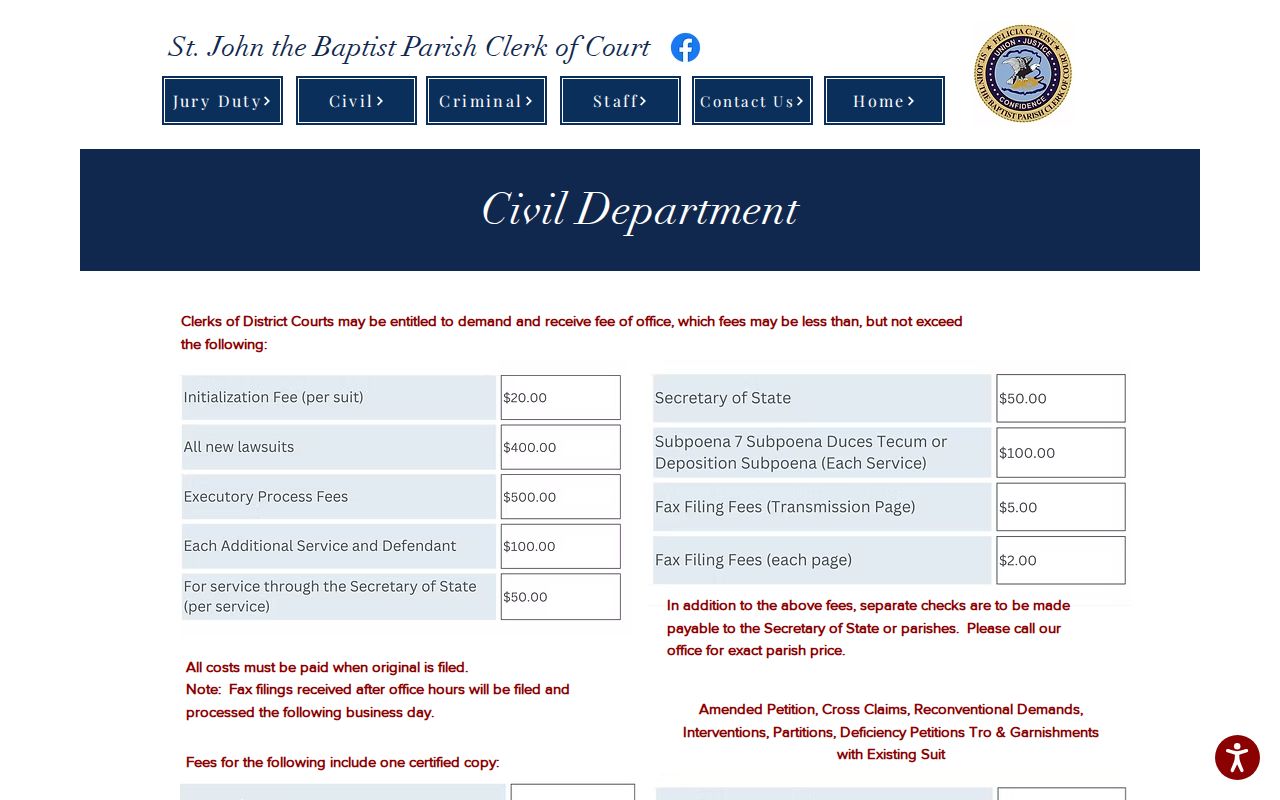
The department information helps connect an online civil result with the office that maintains the underlying court file.
Inside a St. John the Baptist Parish Civil Docket
Louisiana Code of Civil Procedure article 254 sets the local baseline for a civil docket. The docket book carries the action number and title. It also shows the petition filing date, dates of exceptions, answers, and other pleadings, court costs, and counsel of record. The minute book holds court acts: orders, judgments, motions, proceedings, and judicial acts. A parish inquiry adds more. It shows party roles, division, judge, case status, service return, settings, balance, and image links.
| Suit number and caption | The case identifier and formal title. Use the number exactly as the Clerk’s record presents it. |
|---|---|
| Parties and counsel | Plaintiff or petitioner, defendant or respondent, party role, and attorney of record where displayed. |
| Filing trail | Petition, answer, exception, reconventional demand, intervention, or service return entries. |
| Setting and motion | Hearing notice, motion, continuance, civil pretrial, or trial-related event. |
| Order or judgment | A court decision or directive. Ask for the document itself when the exact wording matters. |
A docket event is not the document it names. The petition, an exhibit, a transcript, a minute entry, a judgment, and a certified copy are all distinct records, and each may carry its own access or copy procedure.
St. John Parish Civil Docket Terms
Louisiana civil terms can confuse. A short St. John the Baptist Parish docket entry may be hard to parse. A label tells you the type of court event, not the outcome. For the actual relief, ask the Clerk for the named filing, order, or judgment. The term “allotment” matters here too. A new filing is allotted to one of the 40th JDC divisions under court procedure.
- Petition
- The pleading that starts a civil action.
- Exception
- A procedural or substantive objection raised in response to a civil filing.
- Reconventional demand
- A Louisiana term for a defendant’s claim against the plaintiff in the same case.
- Rule to show cause
- An order or setting requiring a party to appear and explain why relief should or should not issue.
- Minute entry
- The court’s record of what occurred in court, which can be shorter than a transcript.
The Clerk’s forms page lists civil materials. It also warns that the office cannot give legal advice or furnish legal forms. A form title never proves it fits your civil case.
Civil Case Types on the Docket
The civil docket of the St. John the Baptist Parish 40th JDC covers ordinary civil actions. It also handles a broad range of general-jurisdiction matters. The schedule lists civil work apart from other dockets. That split from criminal cases keeps a reader from treating every St. John court record as one type of case. The public civil record holds matters where access is allowed. Some family, juvenile, or protected information may be limited by law or by order.
| Case area | What may appear in the civil docket |
|---|---|
| Property and contract disputes | Petitions, answers, motions, service returns, settings, orders, and judgments. |
| Family and support matters | Custody, support, divorce-related filings, rules, and court settings where public access is permitted. |
| Succession and probate-related matters | Case filings and orders maintained through the parish Clerk’s court-record channels. |
| Injunction and emergency civil matters | Requests, allotted case activity, and orders, with the duty judge able to handle limited emergency matters. |
40th JDC jurisdiction does not pull every parish dispute onto the same docket. Check the court named on a notice or filing before seeking a record.
St. John Parish Civil Filing Timing
Payment comes first for civil filings in St. John the Baptist Parish. The Civil Department expects all costs when the original is filed. Fees vary by transaction. Some listings include one certified copy. Some matters need separate checks for state or parish charges. The Clerk publishes the key figures in graphics. Guessing is a bad plan. Call the civil desk before sending payment.
Fax filings run on their own clock. Per the Civil Department, a fax received after office hours waits. It is processed the next business day. The fax line is 985-497-3972. For counter or record questions, call 985-497-3331 in Edgard. You can also call 985-652-8041 at the Eastbank Clerk office. Confirm the copy and payment first. Then use the Clerk's mailing address. A filing date or court setting can turn on it. Accepted electronic filings carry their own confirmation record under the state's electronic-filing framework. A fax alone is not a completed court event until the Clerk confirms it.
The Clerk’s forms page catalogs civil and related court forms.
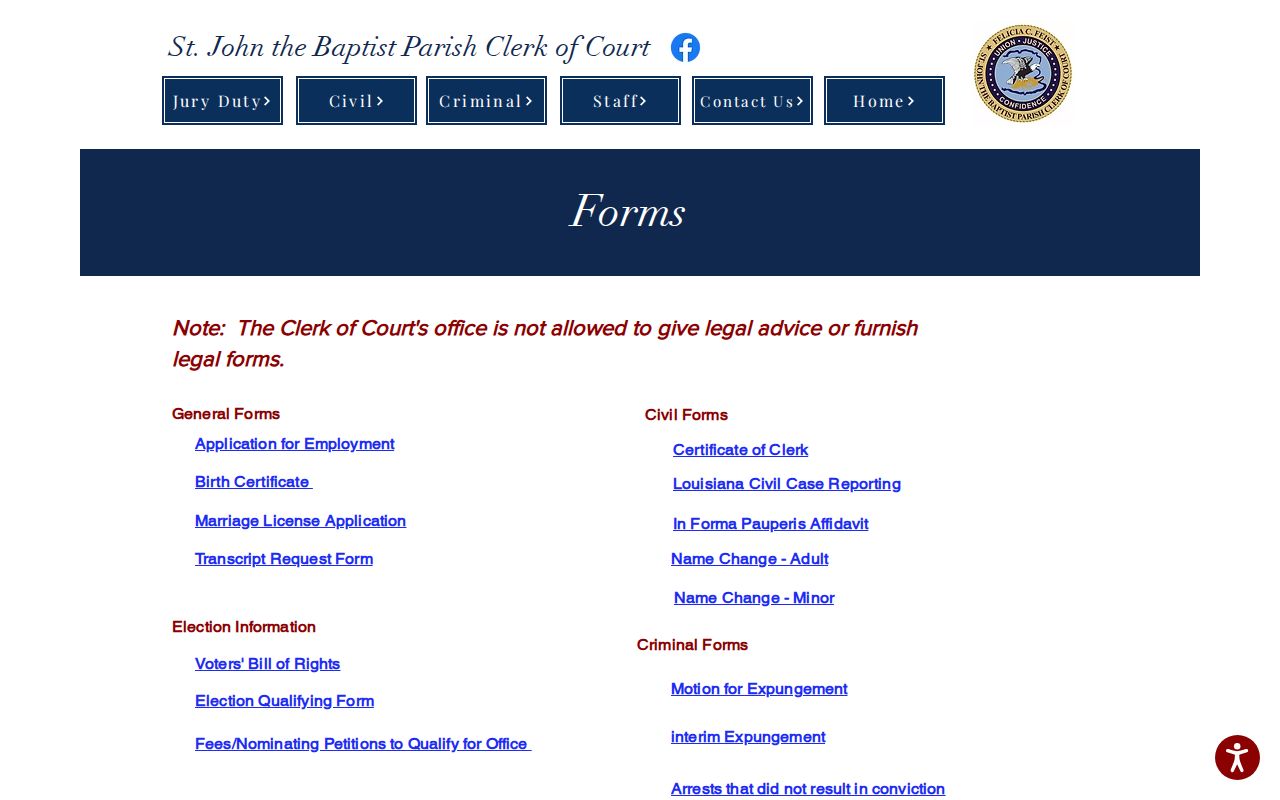
The published form choices support a filing workflow, while the docket records the court events after a matter is filed and allotted.
Civil Docket Settings and Hearings
A St. John the Baptist Parish civil docket can list a setting for a motion, pretrial, family matter, child support matter, or trial-related event. The 40th JDC schedule sorts these into civil jury and bench trial weeks, civil motions, and civil pretrials. It is a schedule framework. Names are not searchable there. A minute entry, notice, or case event is more specific than the recurring calendar category.
Continuances complicate things. In St. John the Baptist Parish, a date can change after a notice goes out. The court's orders-and-forms page includes a Motion & Order for Continuance. A duty judge may handle limited emergency civil matters when the allotted judge is unavailable. Compare the case record with the schedule. Call the Clerk or assigned division if they disagree. A setting is a planned court event. It is not a guarantee that a final hearing will occur.
The court’s orders and forms page lists continuance, custody, support, and other civil resources.
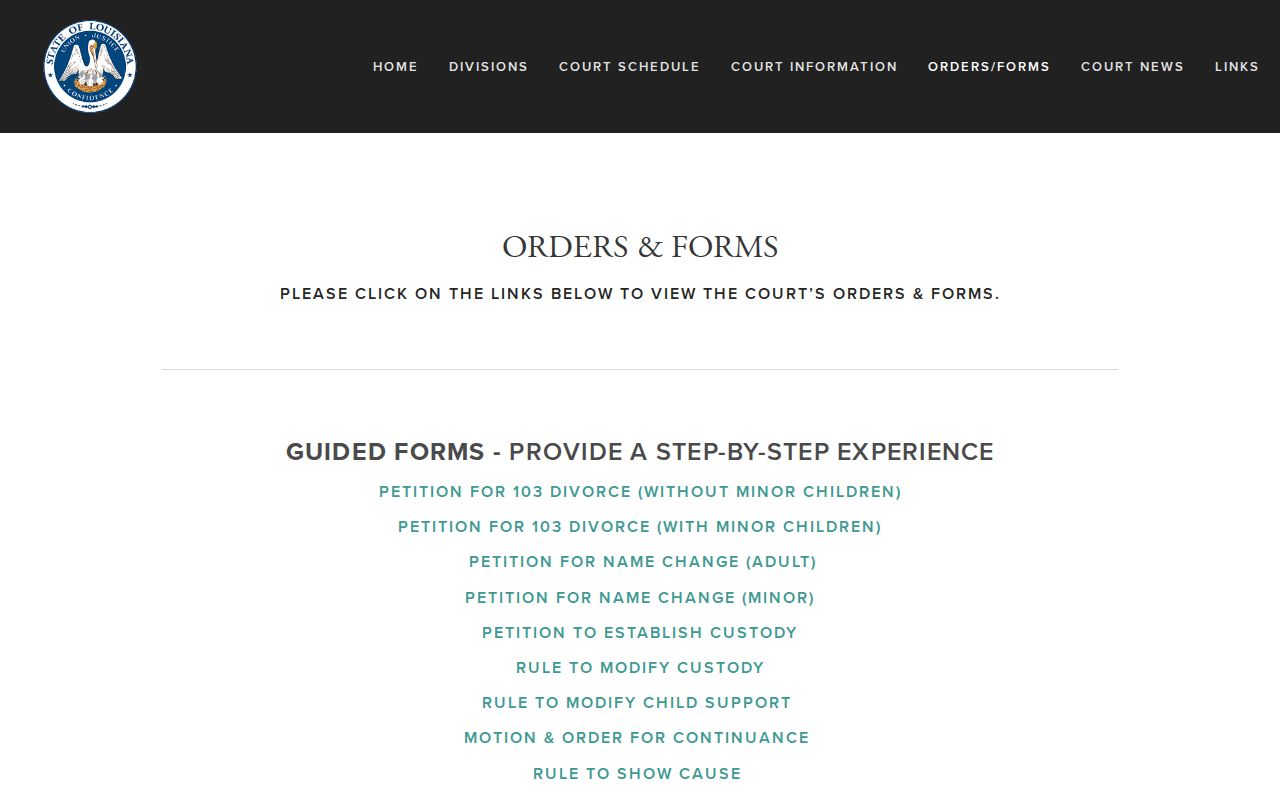
Those court resources show the range of civil procedures that can generate an entry, motion, setting, or order on a docket.
St. John Parish Civil Calendar Rhythms
Civil jury week and civil motion week are different animals in St. John the Baptist Parish. Trial week marks the court's recurring slot for trial work. A civil motion setting is a request for a court order. Civil pretrials, family matters, and child support get their own labels on the 40th JDC schedule. Read the setting type before assuming anything. A calendar label is not a case result.
Protective-order paperwork has a local timing note. The 40th JDC material says the process can take 30 to 60 minutes. The case must be allotted. The judge must sign. Finish before the courthouse closes at 4:30 p.m. That is filing and processing context, not a prediction of any hearing outcome. Read the resulting docket record with the exact order or notice.
Note: Keep the case number. Confirm any current civil setting through the docket, the Clerk, and the assigned division.
Civil Docket Access Rules
Louisiana law sets a public-access baseline. It covers St. John the Baptist Parish court records. The Clerk is the legal custodian. Except where law provides otherwise, the Clerk must allow examination, copying, photographing, or memoranda during required open hours. A civil docket may still omit sealed material, protected personal data, confidential information, or an unavailable image. The underlying court file rests with the Clerk, not the inquiry result.
Public record baseline:
C.C.P. art. 251 identifies the Clerk as custodian and generally permits public examination and copying, subject to exceptions.
C.C.P. art. 254 describes the docket book and minute-book contents for court actions.
R.S. 44:31 recognizes an adult’s right to inspect or copy public records unless an exception applies.
The Legislature’s article 251 text is the primary source for Clerk custody and record inspection.
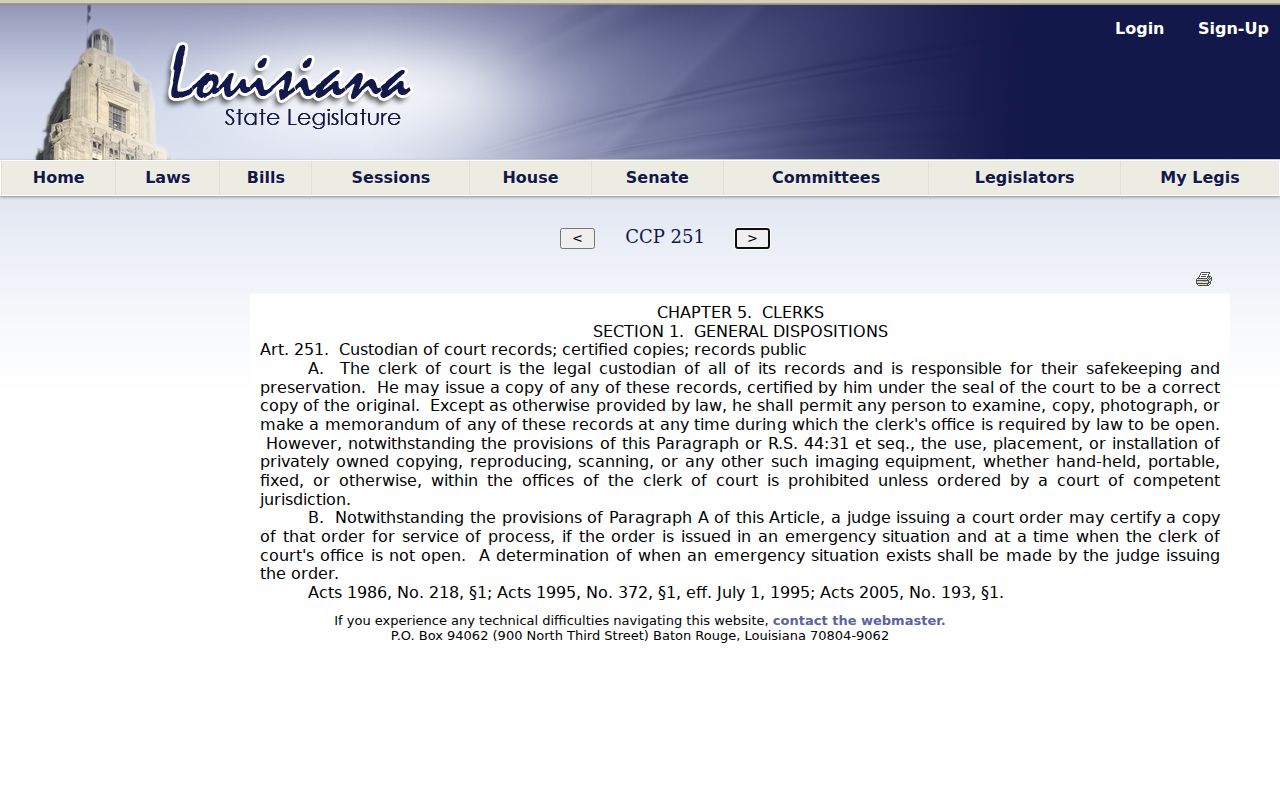
Access to a civil docket does not remove the restrictions that apply to sealed, protected, or otherwise confidential material.
St. John Parish Civil Docket Copies
Inspection, a plain copy, and a certified copy are three different requests in St. John the Baptist Parish. A screen print does not carry the Clerk's seal. Ask whether the recipient needs a certified copy. This matters for judgments and orders. The Civil Department notes that some filing fees include a certified copy. It does not set the price for later requests.
Mail requests should list the case number. Add the document name, plain or certified choice, return address, and contact information. The Clerk's mailing address is P.O. Box 280, Edgard, LA 70049. Fees appear in graphics and can change. Call first to confirm the amount before sending a money order. The Clerk's fee page is the official place to check before ordering.
The Legislature’s article 253 text addresses pleadings and electronic filing.
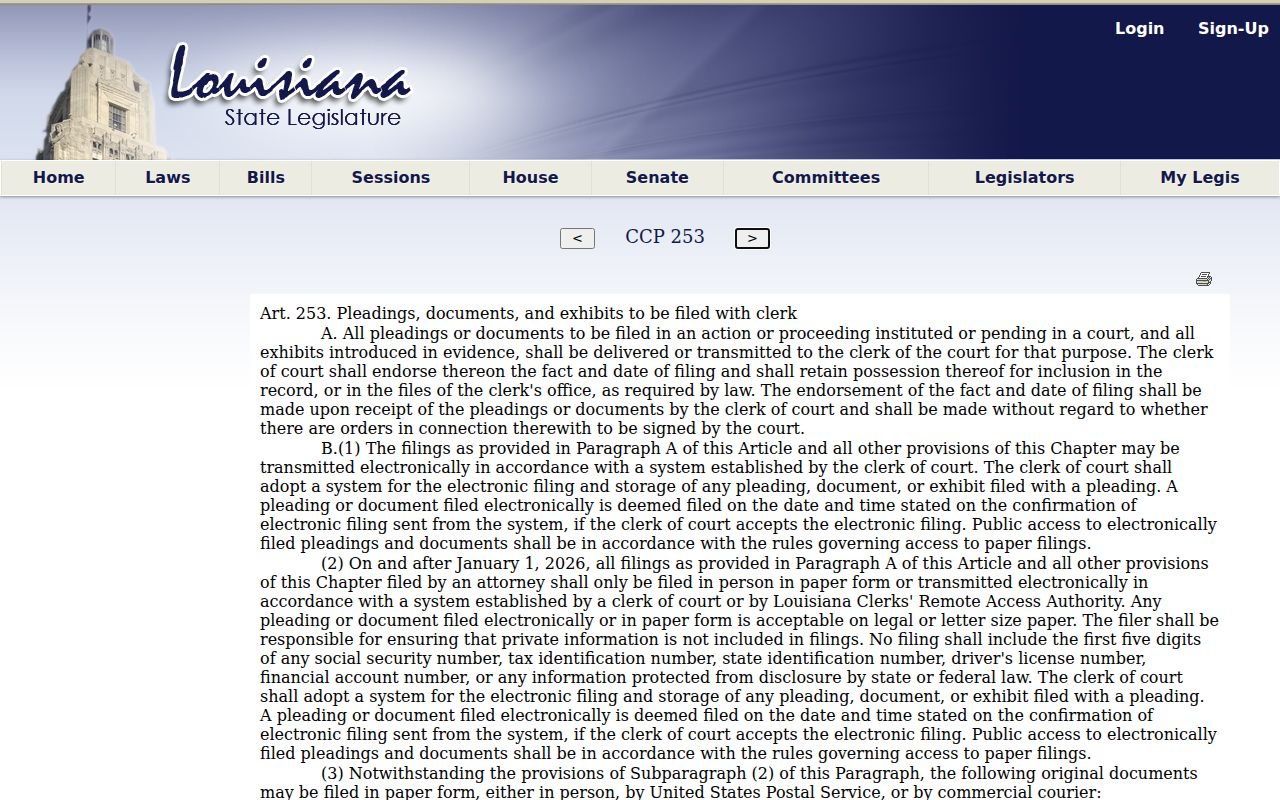
Electronic filing rules affect how documents are filed and protected, while the Clerk remains the custodian for the court record.